
You’ve probably already tried running it yourself. Or handed it to someone who said they do PPC alongside twelve other things. Neither worked and now you’re here, trying to figure out which pay per click company is actually worth hiring before another quarter of the budget disappears.
This guide won’t give you a ranked list of agencies with five-star logos. What it will give you is a framework to evaluate any PPC company properly what to ask, what to walk away from, and what separates agencies that grow accounts from those that just manage them.
What a Pay Per Click Company Actually Does (And What Most Don’t Tell You)
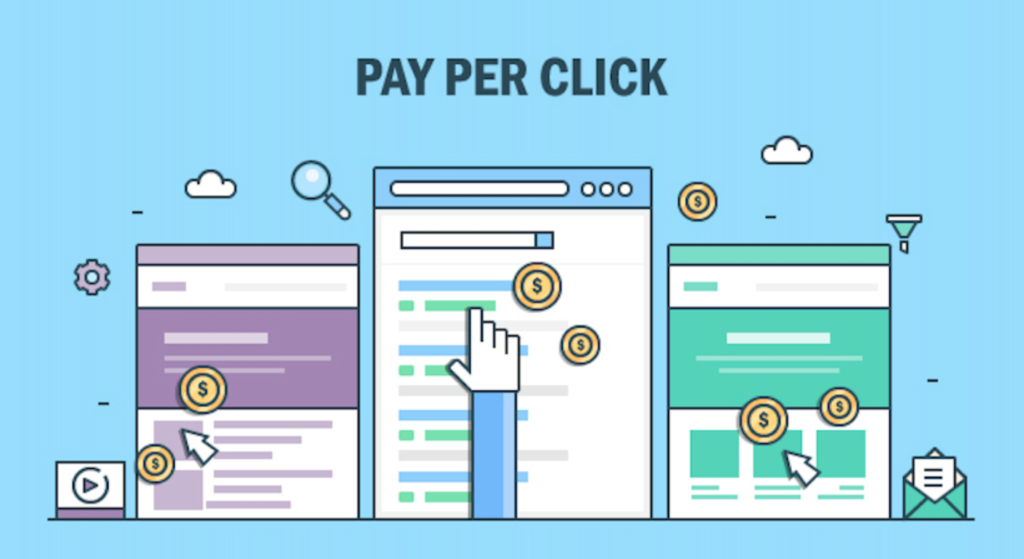
A pay per click company is a specialist agency that manages paid search and paid media campaigns on behalf of businesses, handling everything from keyword strategy and ad copy to bid management, conversion tracking, and performance reporting. Unlike generalist digital agencies, dedicated PPC companies focus exclusively on driving measurable return from ad spend across platforms like Google Ads and Microsoft Ads.
The distinction matters more than most buyers realise. A generalist agency might run your PPC campaigns the same way they manage your social media reactively, without deep platform knowledge. A specialist pay per click company will have certified account managers, proprietary reporting infrastructure, and experience scaling budgets across dozens of accounts in your sector.
Here’s the thing: the gap in output between those two types of agencies isn’t marginal. According to WordStream’s 2023 Google Ads Industry Benchmarks report, the average click-through rate on Google Search across all industries sits at 6.11%. Top-performing PPC agencies routinely deliver CTRs two to three times that figure for their clients not because they have access to different tools, but because they understand match types, Quality Score mechanics, and negative keyword architecture at a level generalists rarely reach.
What most guides skip is the operational layer. It’s not just about who’s running your campaigns, it’s about what systems they use to catch underperformance before it compounds. Leading UK agencies use platforms like Optmyzr for automated bid adjustments and anomaly detection, and SEMrush for competitive keyword gap analysis during onboarding. If an agency can’t tell you what tools they use to monitor your account between reporting cycles, that’s a problem.
The UK PPC Market: Why Location Matters More Than You Think
Most agency comparison sites TechBehemoths, DesignRush list hundreds of UK PPC agencies sorted by star rating. That’s useful for shortlisting. It tells you almost nothing about fit.
Hiring a pay per click company in the UK isn’t the same as hiring one in the US, and this point gets ignored constantly by US-centric resources. A few things that genuinely change your agency selection:
VAT on ad spend. UK agencies typically charge VAT on their management fees at 20%. Some also charge VAT on the media spend they pass through others don’t. Get clarity on this before signing anything. The difference can meaningfully affect your effective CPL when you’re modelling ROI.
Microsoft Ads (Bing) relevance. Bing holds roughly 7–9% of UK desktop search share a figure that sounds small until you’re in B2B, where a disproportionate number of office-based decision-makers use Windows devices with Edge as default. For UK B2B clients specifically, a PPC company that dismisses Microsoft Ads entirely is leaving qualified traffic on the table.
UK consumer search behaviour. Search patterns differ. UK searchers use more formal language in queries, brand loyalty signals differ across sectors, and regional intent variation (London vs. Manchester vs. Edinburgh) can significantly affect campaign structure. An agency that’s only ever worked US accounts won’t have this instinctively.
Or maybe I should say it this way: if an agency’s case studies are all US brands or they’ve never discussed regional geo-targeting with you, ask directly. The answer will be revealing.
Choosing a pay per click company in the UK requires evaluating factors beyond pricing and reviews. According to WordStream’s 2023 benchmarks, top agencies achieve 2–3x industry-average CTRs through technical specialisation. UK-specific considerations including VAT treatment on ad spend, Microsoft Ads coverage, and regional search behaviour should be part of any agency briefing process before contracts are signed.
How to Evaluate a Pay Per Click Company, The Vetting Framework
This is what the agency listing sites don’t give you. Before you shortlist anyone, run every candidate through these criteria.
Google Partner Status What It Means and What It Doesn’t
Google Partner status means an agency has met Google’s minimum requirements for ad spend, account performance, and certification across their team. Google Premier Partner status held by the top 3% of participating agencies requires consistently strong optimisation scores and client growth metrics.
Does Premier Partner status guarantee results? No. It guarantees a baseline of platform competency. Use it as a filter, not a decision.
Quick note: some very capable boutique agencies don’t hold Premier Partner status because they manage a smaller number of accounts below Google’s spend thresholds. Don’t disqualify them automatically but do ask how their team stays current on platform updates.
Questions to Ask Before You Sign Anything
To properly vet a pay per click company before hiring, follow these steps:
- Ask who specifically will manage your account day-to-day, not the team, the named person.
- Request a sample performance report from a current (anonymised) client account.
- Confirm their minimum contract length and notice period in writing.
- Ask how they handle underperformance that triggers a strategy review?
- Confirm whether management fees are fixed or percentage-of-spend, and get VAT clarification.
Each of these will expose something. Most agencies field them confidently. The ones that deflect or generalise are telling you something important.
Red Flags That Should End the Conversation

Some of these are obvious. Some aren’t.
- They guarantee a specific position or number of conversions before running a single day of data
- Their reporting is all vanity metrics impressions, clicks with no ROAS or cost-per-acquisition figures
- They can’t explain their bid strategy beyond we use Smart Bidding
- They lock you into a 12-month contract with no performance exit clause
- They haven’t asked about your sales process, average deal value, or conversion funnel
That last one. An agency that quotes you without understanding your business economics isn’t going to optimise for your actual goal; they’re optimising for their own metrics.
In-House vs Freelancer vs Pay Per Click Company — Which Is Right for You?
In-house team vs pay per click company: An in-house PPC manager is better suited for large enterprises with complex, high-volume accounts needing daily strategic alignment with sales teams. A specialist pay per click company works better when budget is under £500K annually and access to cross-sector expertise, tooling, and A/B testing infrastructure outweighs the cost of full-time headcount. The key difference is scalability versus control.
| Option | Best For | Key Benefit | Limitation |
| In-house PPC manager | Enterprise, £500K+ annual ad spend | Deep business context, daily alignment | High fixed cost, single perspective |
| PPC freelancer | Startups, tight budgets under £2K/month | Low overhead, flexibility | Limited bandwidth, no team backup |
| Pay per click company | SMEs scaling from £3K–£100K/month spend | Cross-sector expertise, tooling, redundancy | Less business context at outset |
| Generalist digital agency | Businesses wanting one supplier for all channels | Simplified vendor management | PPC rarely their core strength |
| Specialist boutique PPC agency | Niche sectors needing deep vertical expertise | Category-specific insight | Smaller team, potential capacity limits |
I’ve seen conflicting data on this. Some sources argue that freelancers outperform agencies on small accounts because of lower overhead and more direct attention. Others cite agency tooling and peer review as decisive advantages. My read is that it depends almost entirely on the freelancer’s background: ex-agency specialists who’ve gone independent often deliver agency-quality work at freelancer prices, but they’re hard to find and vet.
For most UK SMEs spending between £3,000 and £50,000 per month on paid search, a specialist pay per click company typically outperforms both freelancers and generalist agencies on ROAS over a six-month period. According to Google’s own Partner programme data, certified specialist agencies demonstrate measurably higher optimisation scores than non-specialist counterparts managing equivalent budgets.
What Good PPC Management Actually Looks Like Month-to-Month
Most clients only see the report. Here’s what should be happening behind it.
A competent pay per click company runs ongoing search term analysis weekly, not monthly pulling converting queries into exact matches and moving wasted spend into negative keyword lists. They’re testing ad copy continuously: two to three variants per ad group, with statistical significance as the threshold for declaring a winner, not gut feel.
Bid strategy isn’t Smart Bidding and leaves it. It’s a constant negotiation between Target CPA, Target ROAS, and the volume constraints of your market. Good agencies know when to override automated bidding during seasonal spikes or competitor disruptions.
Some experts argue that full automation via Performance Max campaigns represents the future of PPC management, and that agency involvement becomes less critical as Google’s AI improves. That’s valid for brand-awareness-led campaigns with large audience signals. But if you’re running direct-response campaigns where cost-per-lead is your north star, Performance Max’s opacity, no search term visibility, no placement control makes independent agency oversight more important, not less.
They should also be communicating with your sales team. ROAS is a channel metric. Revenue is a business metric. The best PPC companies build attribution models that connect ad clicks to closed deals, not just form fills.
Effective pay per click management involves continuous search term mining, structured ad copy testing, and attribution modelling that ties paid clicks to revenue not just conversions. Leading UK PPC companies use tools like Optmyzr for automated anomaly detection and SEMrush for competitive analysis, ensuring account performance is monitored between formal reporting cycles rather than reviewed reactively.
Pricing Models What UK PPC Companies Charge and Why It Matters
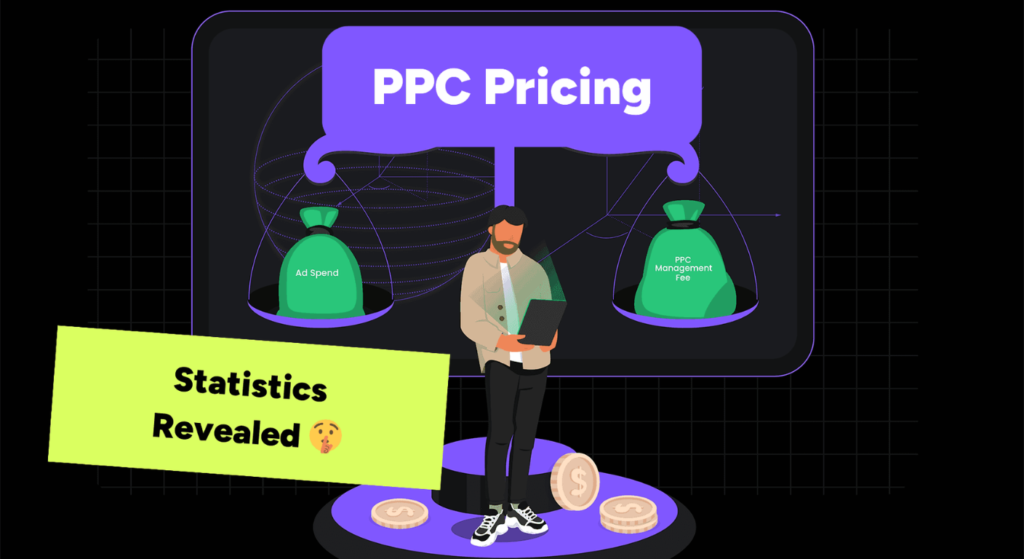
Pricing structures vary, and the wrong model can create misaligned incentives.
Percentage of spend is the most common model typically 10–20% of monthly ad spend. The problem: an agency on this model earns more when your budget goes up, regardless of whether the increase is justified by performance. It’s not inherently conflicted, but it’s worth understanding.
Fixed monthly retainer gives you predictable costs and removes the spend-scaling incentive. It tends to work better for accounts where spend is stable and the work is primarily optimisation rather than scale.
Performance-based (often a hybrid) ties part of the fee to agreed KPIs cost per lead, ROAS targets. Genuinely aligned incentives. Also harder to negotiate and requires clearly defined conversion tracking from day one.
Look, if you’re in the early stages of hiring and an agency won’t discuss pricing structure openly before the proposal stage, that tells you something about how transparent they’ll be when campaign performance gets uncomfortable.
FAQs
Q: What’s the best way to find a reliable pay per click company in the UK?
A: Start with Google Premier Partner directories and cross-reference with case studies in your sector. Prioritise agencies that can name your account manager upfront, show real ROAS data from comparable clients, and offer contract terms with a performance exit clause.
Q: How do I know if a PPC agency is actually performing well?
A: Track cost per acquisition and ROAS weekly, not just impressions and clicks. A performing agency will proactively flag issues before your report date if you’re always the one spotting problems, something’s wrong.
Q: Should I hire a freelancer or a pay per click company for my Google Ads?
A: For monthly ad spend under £2,000, a specialist freelancer often makes more financial sense. Above £5,000 per month, a dedicated PPC company typically delivers better results through tooling, team review processes, and cross-account experience.
Q: Why does my Google Ads account keep spending money without results?
A: The most common causes are broad match keywords without negative lists, no conversion tracking beyond clicks, and campaigns optimising for the wrong objective. A specialist PPC company should audit these within the first two weeks of onboarding.
Q: When should I switch pay per click companies?
A: If your agency can’t explain the reasoning behind their bid strategy, hasn’t tested a new ad copy in 60+ days, or your cost per lead has been static or rising for two consecutive quarters without a proposed strategic change it’s time to review the relationship.