You’ve spent money on Google Ads. Maybe a lot of it. And somewhere between the dashboard, the jargon, and the monthly reports that never quite explain why leads aren’t coming in you’ve started wondering whether you’re doing this wrong.
You probably are. That’s not a criticism. It’s the reality for most small and mid-sized businesses running ads without dedicated PPC expertise.
Here’s what this article does: it tells you exactly what a legitimate Google ad management service includes, what you should expect to pay in 2026, and critically how to tell the difference between an agency that will grow your account and one that will drain it.
What Google Ad Management Services Actually Are
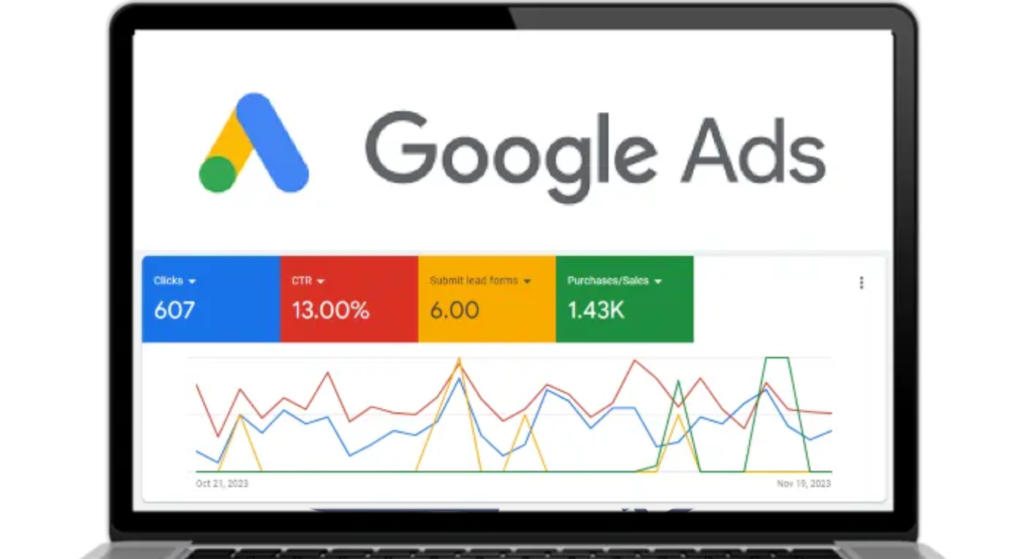
Google ad management services refer to the ongoing professional management of a business’s Google Ads account, including campaign strategy, keyword research, bid management, ad copywriting, conversion tracking, and performance reporting. A managed service replaces or supplements in-house effort with specialist expertise aimed at improving return on ad spend (ROAS).
That definition covers the basics. But the real question is what’s actually happening inside a well-run account and whether your current setup (or your current provider) is doing any of it.
According to WordStream’s Google Ads Industry Benchmarks (2023), small businesses waste an average of 25% of their Google Ads budget on irrelevant clicks, primarily due to poor keyword match type selection and absent negative keyword lists. That’s not a minor inefficiency. On a £2,000/month ad budget, that’s £6,000 a year leaving your account with nothing to show for it.
Professional management is, at its core, a cost-recovery decision before it’s a growth decision.
What a Proper Google Ads Management Service Should Include
Not all services are equal. Some agencies charge £500/month and touch your account twice. Others charge £300 and deliver more than providers at three times the price. The difference isn’t always the fee it’s what’s actually being done.
Here’s what a legitimate managed service covers:
Account Structure and Campaign Setup
This is where most DIY accounts fail. A properly structured Google Ads account separates campaigns by product or service line, assigns appropriate match types (broad, phrase, exact each used deliberately, not by default), and builds tightly themed ad groups. If your account was set up using Google’s automated Smart Campaign wizard, it almost certainly lacks this foundation.
Keyword Research and Negative Keyword Management
Real keyword research uses tools like SEMrush to identify search terms with commercial intent, analyse competitor bidding behaviour, and map queries to the correct stage of the buying journey. Negative keyword management blocking irrelevant searches is equally important and is what most self-managed accounts neglect entirely.
This isn’t a one-time task. It’s weekly.
Bid Strategy Management
Manual CPC, Target CPA, Target ROAS, Maximise Conversions each bidding strategy has a context in which it performs. Agencies managing accounts at scale use tools like Optmyzr to model bid adjustments, monitor Quality Score impact, and automate rules without losing control of spend. Handing this over to Google’s Smart Bidding without sufficient conversion data is one of the most common and costly mistakes in the industry.
Ad Copywriting and Testing
Good ad copy isn’t just about keywords in the headline. It’s about matching the ad’s message to the search intent, differentiating from competitors showing in the same auction, and running structured A/B tests across Responsive Search Ads. If your agency has never changed your ad copy, that’s a red flag.
Conversion Tracking and Attribution
You cannot optimise what you cannot measure. A well-managed account has verified conversion tracking ideally through Google Tag Manager with GA4 integration that records actual business outcomes: form fills, phone calls, purchases. Not just clicks. If your agency reports on clicks and impressions but not conversions, you’re flying blind.
Reporting That Means Something
Monthly reporting should show you what changed, why it changed, and what’s happening next. Agencies using Optmyzr or similar platforms can generate client-facing dashboards that surface the metrics that matter ROAS, cost per conversion, impression share rather than burying the lead in click-through rate tables.
What Google Ads Management Actually Costs in 2026

This is where most agency websites go silent. Vague phrases like bespoke pricing and get in touch for a quote are everywhere. Here’s the actual landscape.
Flat fee vs. percentage of spend:
A flat monthly fee (typically £300–£1,500 for SMEs) suits businesses with stable ad budgets because costs are predictable regardless of spend changes. A percentage-of-spend model (usually 10–20% of monthly ad budget) aligns the agency’s incentive with your growth but can inflate management costs if your spend scales quickly. The key difference is whether your agency benefits from you spending more.
There are three dominant fee structures in the UK market:
Quick Comparison
| Model | Best For | Key Benefit | Limitation |
| Flat Monthly Fee | Stable budgets, £500–£3k/month spend | Predictable costs | Agency has no financial incentive to scale your results |
| % of Ad Spend (10–20%) | Growing businesses scaling spend | Agency incentivised by performance | Fees rise with spend, even if ROAS doesn’t improve |
| Performance/Commission | Lead-gen focused campaigns | You pay for results | Hard to verify attribution; rare from reputable agencies |
| Hybrid (flat + % over threshold) | Mid-market SMEs | Balances predictability and incentive | Slightly complex to audit |
Typical UK pricing in 2026:
- Freelancer: £150–£500/month. Lower cost, variable quality, minimal tooling.
- Boutique agency (1–10 person): £500–£1,500/month flat, or 12–18% of spend.
- Mid-size agency: £1,000–£3,000/month, often with dedicated account manager.
- Large agency or Google Premier Partner: £2,500+/month, suitable for £10k+ monthly budgets.
Quick note: Google Premier Partner status means the agency meets Google’s spend thresholds and certification requirements across their client base. It signals competence at scale but it doesn’t guarantee good results for your specific account.
Most SMEs spending £1,000–£5,000/month on ads are best served by a boutique agency or specialist freelancer with verified case studies in their sector.
The Red Flags No One Tells You to Look For
Some things look like management. They aren’t.
Lack of access to your own account. Your Google Ads account should be in your name, under your Google login. Any agency that insists on owning the account or refuses to give you admin access is holding your data and your campaign history hostage. Walk away.
Reporting on impressions and clicks only. Impressions tell you how often your ad appeared. Clicks tell you how often someone visited your site. Neither tells you whether you made money. If your monthly report doesn’t include cost per conversion and conversion volume, you’re not being managed, you’re being appeased.
No mention of negative keywords. Ask directly: Can you show me the negative keyword list for my account? A blank stare or a vague answer tells you everything.
Set and forget bidding. Automated bidding needs data to work. An account with fewer than 30–50 conversions per month shouldn’t be running Target CPA bidding; it won’t have enough signal. If your agency switched you to Smart Bidding immediately without waiting for data, they optimised for their convenience, not your results.
Look, if you’re currently paying an agency and haven’t seen your account in six months, that’s not a relationship. That’s a subscription to nothing.
How to Choose the Right Google Ads Management Provider
To choose a Google Ads management service that delivers real results, follow these steps:
- Confirm you’ll retain full admin access to your own Google Ads account.
- Ask for case studies from clients in your industry or with similar budgets.
- Request a sample monthly report to check it shows conversion data, not just clicks.
- Ask how they handle negative keywords and how often they update them.
- Clarify the fee model flat, percentage, or hybrid and what triggers a fee increase.
- Check whether they use professional tooling (Optmyzr, SEMrush, or equivalent).
- Confirm conversion tracking will be verified before any campaign goes live.
Most people assume the biggest agencies get the best results. The data doesn’t really support that or maybe I should say it this way: the best results come from specialists who understand your market, not generalists who manage a hundred different industries at arm’s length.
I’ve seen conflicting data on this; some benchmarks suggest Premier Partners outperform smaller agencies on average ROAS, while other studies show boutique specialists in specific niches consistently beat them on cost-per-lead. My read is that sector-specific experience matters more than agency size, especially at SME budget levels.
What to ask in the first conversation:
- What’s your process for the first 30 days?
- How do you handle underperforming campaigns? What’s your escalation process?
- What does a typical monthly report look like for a client at my spend level?
- Have you managed accounts in [your industry] before?
- What bidding strategy would you start with, and why?
A competent agency will answer these without hesitation. A bad one will pivot to talking about their awards.
Managed Google Ads for Small Business: Is It Worth It?
Here’s the honest version: it depends on your budget and your baseline.
If you’re spending less than £500/month on ads, management fees will eat a disproportionate share of your budget. At that level, a one-off account audit and setup from a specialist followed by self-management may serve you better than ongoing retainer costs.
Above £1,000/month, the maths shifts. A well-managed account typically improves ROAS by 20–40% within 90 days through better keyword management, improved Quality Scores (which reduce your cost-per-click), and proper conversion tracking. On a £2,000/month budget, a 25% improvement in efficiency covers a £500 management fee and then some.
Some experts argue that small businesses should master Google Ads internally before outsourcing. That’s valid for businesses with a dedicated in-house marketer who has time to learn the platform properly. But if you’re a business owner running ads between client calls, the opportunity cost of that learning curve is significant and the mistakes made during it are expensive.
FAQs
Q: What’s the best fee structure for Google Ads management?
A: For most SMEs, a flat monthly fee between £500–£1,500 offers predictability. A percentage-of-spend model (10–20%) makes more sense if your budget is growing quickly and you want the agency’s incentives aligned with your scale.
Q: How do I know if my Google Ads agency is actually doing anything?
A: Ask for access to your account and check the change history tab. A legitimate agency makes frequent, documented changes keyword updates, bid adjustments, and ad tests. No changes in 30 days means no active management.
Q: Should I hire an agency or a freelancer for Google Ads?
A: Freelancers often offer better value at lower budgets (under £2,000/month ad spend) and more direct communication. Agencies provide more resource depth for larger, multi-campaign accounts. Sector experience matters more than either.
Q: Why does my Google Ads cost keep going up without better results?
A: The most common causes are broad match keywords capturing irrelevant traffic, no negative keyword list, and automated bidding running without enough conversion data to optimise correctly. These are fixable but require active account management.
Q: When should I switch Google Ads agencies?
A: If you haven’t received a proactive recommendation in 60 days, your cost-per-conversion is rising without explanation, or your agency can’t show you documented changes in your account those are clear signals to start looking.